What is Counter Steering?
Counter steering is a vital skill for motorcycle riders. It is a technique used to control the direction of a motorcycle efficiently. While the term might seem technical, it is a natural action that riders perform intuitively, especially at higher speeds.
The concept of counter steering explained
Counter steering means turning the handlebars in the opposite direction of where you want to go. For instance, if you want to turn left, you push the left handlebar forward. Similarly, to turn right, you push the right handlebar forward. This action leans the motorcycle in the desired direction and enables a smooth turn. The technique works because of the unique physics of two-wheeled vehicles and their need to maintain balance.
Why it is essential for motorcycle riding
Counter steering is essential for maintaining control and safety on a motorcycle. It allows riders to make quick and precise direction changes, especially at speeds above 12 mph. This skill improves your ability to handle curves, avoid obstacles, and navigate efficiently. Without counter steering, safe and responsive riding at higher speeds would be significantly harder. Understanding and practicing this technique can help riders become better and more confident motorcyclists.
How Counter Steering Works
Understanding how counter steering works is essential for every motorcycle rider. It relies on the physics of motorcycles and their unique dynamics.
Physics behind counter steering
Counter steering works due to the principles of gyroscopic forces and balance. A motorcycle’s wheels act as gyroscopes, spinning rapidly as the bike moves. When you push the handlebar, the gyroscopic effect of the wheels causes the bike to lean in the opposite direction. This lean is what enables smooth turning.
Another factor is Newton’s laws of motion. When you push the handlebar, the force redirects the bike’s trajectory by shifting weight and creating a lean toward the intended direction. At higher speeds, the effect becomes more pronounced, allowing precise control while turning.
Relationship between handlebars and motorcycle dynamics
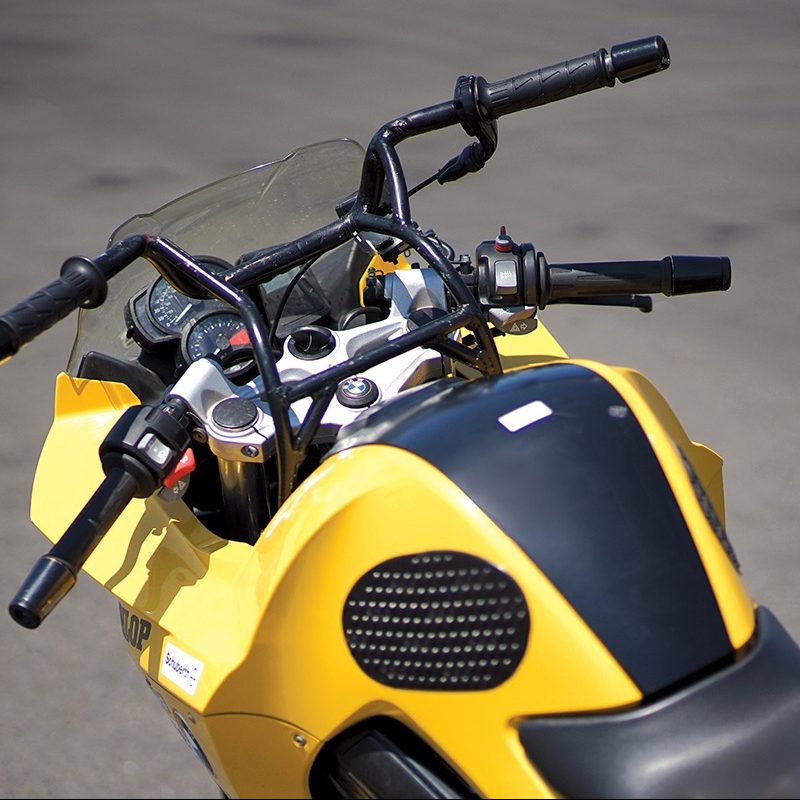
The handlebars are the primary control point for initiating counter steering. They influence the bike’s lean and direction change. When you push a handlebar, the bike’s front wheel tilts slightly, creating a force that leans the motorcycle.
Motorcycle dynamics depend heavily on rider input through the handlebars. Even small movements have significant impacts. Proper use of counter steering allows riders to navigate curves efficiently and maintain stability at higher speeds. Practicing control through handlebars ensures smoother and safer rides.
By understanding the physics and how handlebars affect motorcycle dynamics, riders can improve their counter steering skills. Learning this will enhance their ability to handle various riding conditions confidently.
The Right Technique for Counter Steering
Mastering the technique of counter steering ensures safe and smooth motorcycle rides. Learning the right approach helps beginners develop confidence and control in handling curves, turns, and obstacles.
Step-by-step guidance for beginners
- Start with understanding handlebars: Push the left handlebar forward to turn left; right to turn right.
- Practice at low speeds: Begin practice at speeds above 12 mph in a safe, open area.
- Maintain focus on balance: Keep your body aligned with the bike as you lean smoothly into turns.
- Control your movements: Apply light, intentional force when pushing the handlebars to avoid jerky movements.
- Keep a relaxed grip: Avoid gripping the handlebars too tightly; stay relaxed for better maneuverability.
- Visualize the turn: Always look ahead in the direction you want to go; never to the ground.
- Repeat and refine: Practice repeatedly and refine your technique to build muscle memory.
Common mistakes to avoid
- Oversteering: Excessive force on the handlebars can cause instability. Use controlled, smooth inputs.
- Neglecting speed adjustments: Ensure proper speed management; avoid practicing counter steering at very low or high speeds.
- Ignoring posture: A stiff or improper posture affects your balance and turning ability.
- Looking down instead of ahead: Always keep eyes focused on the road or curve, not your handlebars.
- Avoiding practice: Lack of consistent practice can hinder improvement; embrace repetition and learning.
By following these steps and avoiding common errors, new riders can develop effective counter steering skills. Practicing patiently and safely is key to mastering motorcycle control and building long-term riding confidence.

Benefits of Counter Steering
Counter steering is a vital skill for motorcyclists. It offers multiple advantages that enhance the riding experience and safety. Mastering this technique can make riders more confident and capable on the road.
Enhanced control and safety
Counter steering provides superior control over the motorcycle. By using this technique, riders can navigate sudden changes in direction with precision. This is especially useful when avoiding obstacles or making quick turns.
Safety improves significantly when counter steering is applied correctly. It ensures the bike maintains balance while turning, reducing the risk of losing control. Riders can better tackle high-speed turns or challenging curves by leveraging counter steering.
In unexpected situations, counter steering allows quicker responses, helping avoid accidents. With practice, riders gain the ability to steer effectively, even in complex riding environments, thereby ensuring a safer ride.
Improved cornering ability
Counter steering enhances a rider’s ability to corner smoothly, even at higher speeds. It allows the motorcycle to lean naturally into the turn while maintaining stability. This results in sharper and more fluid cornering.
Using counter steering, motorcyclists can confidently handle tight and sharp curves. The technique reduces unnecessary effort and ensures the rider stays aligned with the bike through the turn.
Proper cornering boosts overall riding efficiency and enjoyment. Riders experience less fatigue, better grip, and more control when counter steering correctly. By mastering this skill, one can tackle corners like a pro, ensuring a seamless and safe ride.
In conclusion, the benefits of counter steering go beyond basic motorcycle control. It improves both safety and handling, making it an essential skill for every rider.
Practicing Counter Steering Safely
Learning counter steering requires a safe and controlled environment. Step-by-step practice ensures safe progress and confidence building.
Best environments for practice
- Open parking lots: Use large, empty spaces with no traffic to practice freely without distractions.
- Quiet roads: Choose low-traffic roads to practice basic turns and steering without much stress.
- Motorcycle training areas: Seek motorcycle safety courses or training grounds designed for learning skills like counter steering.
- Straight stretches: Start practicing at slow to moderate speeds on straight stretches.
- Wide, gentle curves: Use roads with easy curves to practice turning without sharp angles or steep inclines.
Focus on avoiding areas with heavy traffic, poor surfaces, or unexpected hazards during initial practice. Safety is key.
Gradual steps to build confidence
- Start slow: Begin practicing at speeds around 12–20 mph to stay comfortable and safe.
- Feel the handlebars: Apply gentle pressure on one handlebar to experience the bike’s response during turns.
- Practice leaning: Lean your body with the motorcycle as you navigate gentle curves.
- Increase speed gradually: As your confidence builds, practice at slightly higher speeds.
- Introduce sharper turns: Slowly challenge yourself with tighter corners as skills improve.
- Consistency is vital: Practice regularly to build muscle memory and improve your control.
- Assess surroundings: Always scan the area ahead for obstacles and choose safe paths for practice.
By choosing the right environments and progressing at your own pace, mastering counter steering becomes easier. Stay patient, consistent, and always prioritize safety.
Counter Steering vs. Leaning
Motorcycle riding involves two critical techniques: counter steering and leaning. Understanding these methods is important.
Differences in techniques
Counter steering and leaning are distinct yet connected techniques for controlling motorcycles.
- Counter steering mechanics: You push the handlebars in the opposite direction of the turn. This action causes the motorcycle to lean naturally into the turn.
- Leaning mechanics: Leaning involves shifting your body weight to assist the motorcycle’s balance during turns.
- Execution: Counter steering relies on handlebar input and gyroscopic forces. Leaning focuses on using your body to complement the bike’s movements.
- Speed relevance: Counter steering works best at speeds over 12 mph. Leaning is effective at all speeds.
- Control point: Counter steering uses handlebars for direct control. Leaning relies on body positioning and weight shifts.
When to use each method
Both methods have specific applications based on the riding conditions.
- High-speed turns: Use counter steering for precise and controlled direction changes on highways or fast roads.
- Low-speed maneuvers: Rely on leaning at lower speeds for tight turns or navigating around obstacles.
- Sharp curves: Combine counter steering and leaning to tackle tight corners efficiently and safely.
- Traffic navigation: Leaning helps in slow-speed traffic or heavy congestion for stability and direction change.
- Complex turns: Counter steering is key for technical and challenging curves, ensuring precise control.
Knowing when and how to use counter steering and leaning enhances your riding skills. Practice combining both techniques to achieve smooth, confident control in diverse conditions.
Advanced Tips for Counter Steering Proficiency
Mastering counter steering requires attention to detail and consistent practice. Advanced riders can refine this skill to handle tighter turns and complex riding scenarios with ease.
Techniques for mastering tight turns
- Adjust speed before the turn: Slow down early before approaching tight corners.
- Push the right handlebar firmly to turn right: Maintain gentle but firm control over the handlebars.
- Lean with precision: Align your body movement with the motorcycle to ensure proper balance.
- Maintain consistent throttle control: Avoid sudden braking or rapid acceleration mid-turn.
- Practice figure-eight patterns: Use open areas to repeat sharp left and right turns in succession.
- Stay steady and focused: Keep your vision ahead on the curve’s exit point, not directly at the handlebars.
- Refine posture: Keep your back straight and your arms relaxed for smooth control.
- Check tire traction: Ensure tires are in good condition to handle tight maneuvers effectively.
Real-life scenarios for application
- Navigating mountain curves: Counter steer into tight corners on winding mountain roads.
- Avoiding sudden obstacles: Use counter steering to maneuver around traffic cones or debris quickly.
- City riding: Utilize counter steering to take sharp turns in narrow urban streets.
- High-speed highway exits: Employ precise counter steering when shifting lanes or using exit ramps.
- Group riding: Maintain tight control and spacing using counter steering during group motorcycle rides.
- Rainy conditions: Practice gentle counter steering while maintaining balance in slippery situations.
- Performance riding: Employ counter steering techniques during competitive or track riding for enhanced accuracy.
By using these advanced tips, riders can sharpen their counter steering skills. Applicability in real-life scenarios makes riding not just safer but also more enjoyable. Practice consistently and build expertise to handle turns like a pro.
Frequently Asked Questions (FAQ) About Counter Steering
Debunking myths around counter steering
Counter steering is often misunderstood among motorcyclists. Some believe it’s overly complex or unsafe. Let’s clarify these myths:
- Myth: Counter steering is only for advanced riders.
- Truth: Even beginners use counter steering without realizing it. It’s a natural riding technique.
- Myth: You don’t need counter steering for small bikes or at low speeds.
- Truth: While it’s more noticeable at higher speeds, counter steering is useful for any bike type.
- Myth: Leaning is more important than counter steering.
- Truth: Both techniques work together. Counter steering initiates a lean for controlled turning.
- Myth: Counter steering is unsafe and hard to learn.
- Truth: It’s essential for safety and becomes intuitive with practice. Start slow and consistent.
By understanding and overcoming these misconceptions, riders can confidently embrace counter steering motorcycle for safer rides.
Answers to common rider concerns
New riders often have questions about counter steering. Here are answers to common concerns:
- What’s the best speed to start learning counter steering?
- Counter steering is effective above 12 mph. Start practicing in low-traffic areas.
- How do I practice counter steering without losing control?
- Use gentle handlebar inputs and maintain a steady speed. Avoid sudden movements.
- Should I focus on counter steering or leaning when turning?
- Use counter steering to initiate the turn, and lean naturally with the bike for balance.
- Can counter steering be harmful to the bike?
- No, it’s a normal and safe technique designed for motorcycle handling.
- How can I stay relaxed while practicing counter steering?
- Keep a light grip on the handlebars. Focus on looking ahead, not at the ground.
- What if I face a panic situation while riding?
- Stay calm. Push the correct handlebar to steer away safely and regain balance.
These FAQs address common doubts. Always combine these tips with consistent practice to improve skills.
Leave a Reply