Introduction: The Underrated Legend of the 90s
The automotive world is full of icons, but few have a following as dedicated as the Nissan Skyline lineage. Among these legendary machines, the GTR R33 occupies a unique and sometimes misunderstood space. When it first debuted, it lived in the shadow of its predecessor, the beloved R32. However, time has been incredibly kind to this model. Today, it stands as a testament to engineering evolution and driver-focused design. Consequently, enthusiasts are rediscovering what made this car so special in the first place.
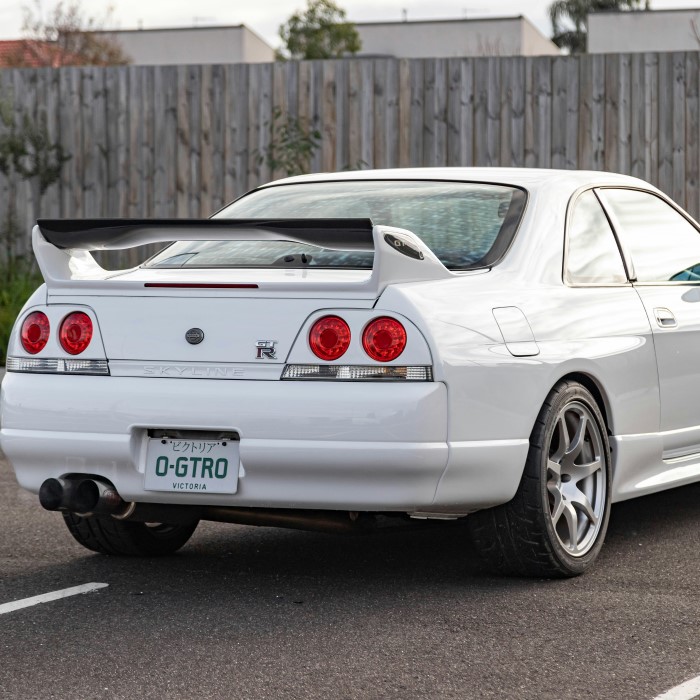
It was not just a simple update. Rather, it was a comprehensive refinement of a winning formula. This car offered a level of sophistication that was years ahead of its time. Therefore, it has earned its place in the JDM hall of fame. The GTR R33 represents the perfect blend of raw power and technological advancement. It bridges the gap between the analog feel of the 80s and the digital precision of the modern era. For many, it is the sweet spot in the Skyline history. In this article, we will explore the reasons behind its enduring legacy. We will look at its engineering, its performance, and its cultural impact. By the end, you will understand why this car remains a favorite.
The Engineering Marvel: The RB26DETT Heart
At the core of the GTR R33 lies its beating heart, the legendary RB26DETT engine. This powerplant is arguably one of the greatest engines ever produced by Nissan. It is a 2.6-liter inline-six twin-turbocharged masterpiece. Engineers designed it with strength and reliability as top priorities. Consequently, the iron block could handle immense power levels with ease. Enthusiasts love this engine because it responds incredibly well to modification. For instance, many owners push the stock internals to over 600 horsepower without issue. This potential for power is a key reason for the car’s cult status. However, the engine was not just about raw numbers. Nissan also improved the throttle response compared to the R32. They achieved this by using a new compressor wheel design for the turbochargers. Therefore, the car felt more eager and alive on the road.
Furthermore, the engine management system saw significant upgrades. The R33 utilized a more advanced ECU compared to older models. This allowed for better control of the fuel mixture and ignition timing. As a result, the engine ran more smoothly and efficiently across the rev range. Nissan also addressed common issues found in the R32 version. They strengthened the cylinder head and improved the oiling system. These changes ensured that the GTR R33 was not just faster but also more durable. Reliability is a crucial factor for used car buyers today.
Mastering the Road: The ATTESA E-TS Pro System
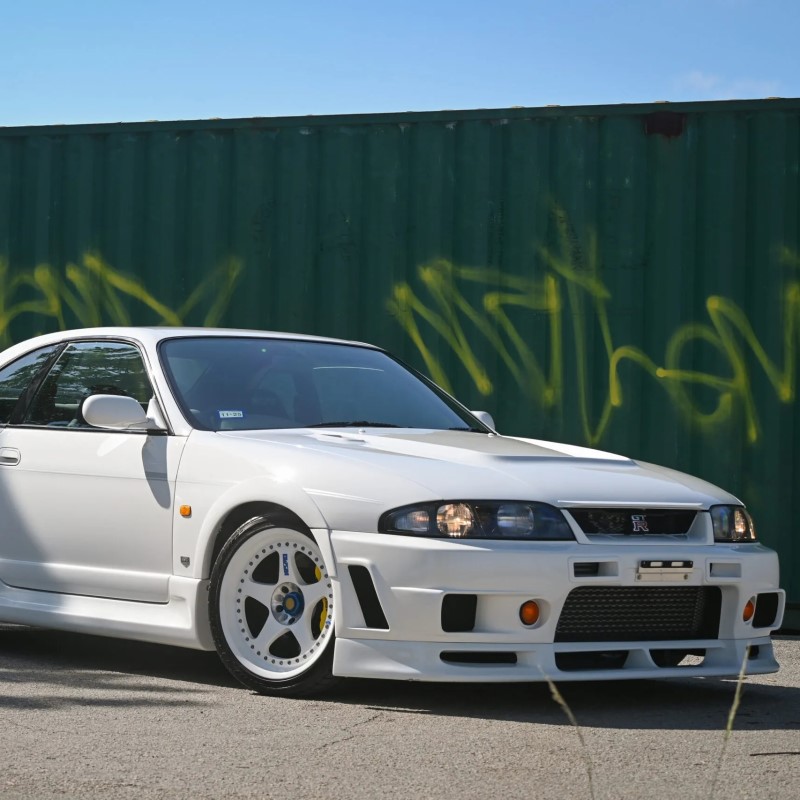
One of the most defining features of the GTR R33 is its advanced all-wheel-drive system. Nissan called this system ATTESA E-TS Pro. It was a revolutionary piece of technology in the 1990s. This system is largely responsible for the car’s “Godzilla” nickname. It allowed a heavy, powerful car to handle like a much lighter vehicle. Basically, the system could distribute torque between the front and rear wheels instantly. Under normal driving conditions, the car behaved like a rear-wheel-drive vehicle. This made it exciting and predictable for drivers who enjoyed traditional sports car dynamics. However, if the system detected a loss of traction, it would intervene immediately. It could send up to 50% of the power to the front wheels. Consequently, the car maintained incredible grip even in poor weather or aggressive cornering.
Moreover, the R33 version featured an Active Limited Slip Differential. This was a significant upgrade over the previous generation. The system worked in harmony with the all-wheel-drive to manage torque vectoring. It monitored various factors like wheel speed, throttle position, and steering angle. Therefore, the car always put the power down effectively. Drivers often praise the R33 for its stability at high speeds. It feels incredibly planted to the road, inspiring confidence behind the wheel.
This technological marvel bridged the gap between the R32’s mechanical feel and the R34’s digital precision. It provided a driving experience that was both forgiving and rewarding. For a 90s car, the sophistication level was simply astounding. Many modern cars still use similar principles in their AWD systems today. Thus, the GTR R33 was way ahead of its time. It proved that a heavy car could still be agile and responsive. This balance is what makes it such a joy to drive on both the street and the track.
A Design That Aged Gracefully
The styling of the GTR R33 has been a subject of debate for years. When it launched, many critics felt it was too soft compared to the boxy R32. The curves were more pronounced, and the silhouette was rounder. However, looking back, this design has aged remarkably well. It strikes a perfect balance between aggression and elegance. The rounded shape actually serves a functional purpose. It offers better aerodynamic efficiency than its predecessors. In fact, the R33 was the first GT-R to be designed with a focus on aerodynamic downforce. Nissan spent considerable time in the wind tunnel refining the body. Consequently, the car cuts through the air with minimal drag while maintaining stability.
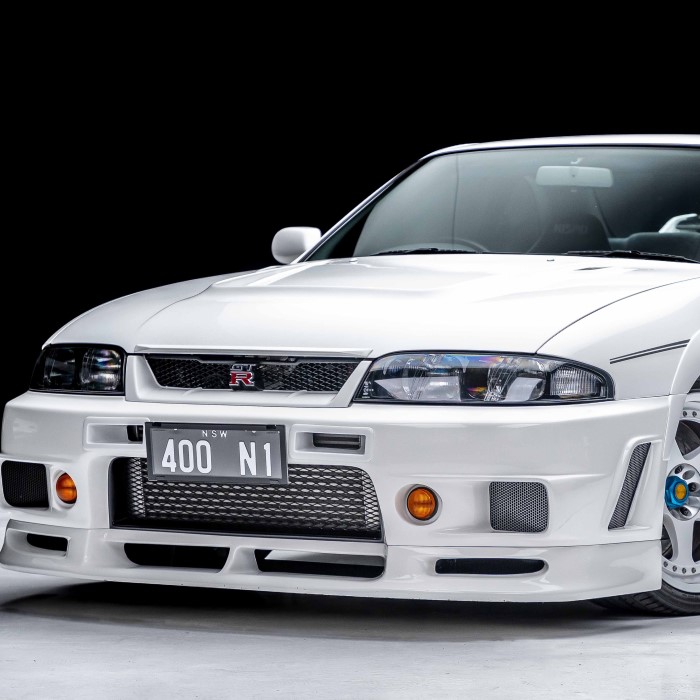
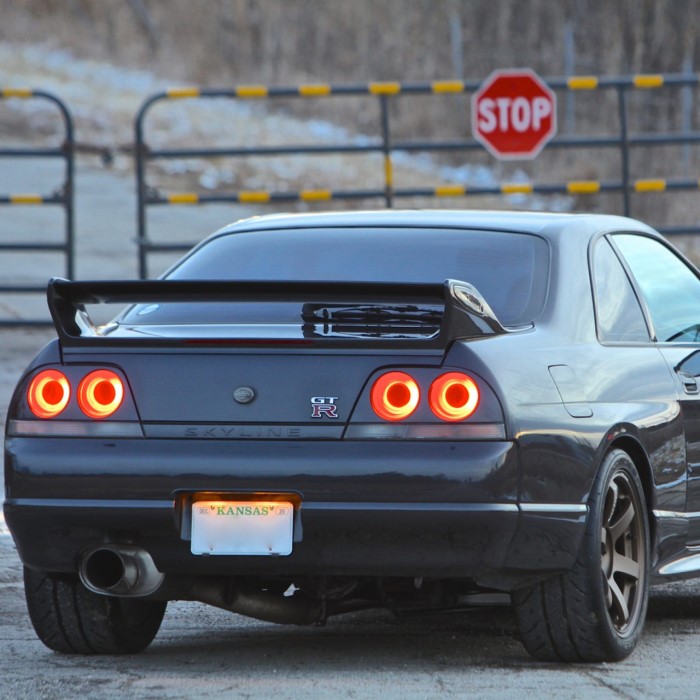
The iconic quad taillights remain, of course. They are a signature element of the Skyline DNA. But the bodywork on the R33 looks more cohesive and fluid. It does not have the sharp edges that defined the late 80s. Instead, it previewed the design language that would become popular in the 90s and early 2000s. Today, car enthusiasts appreciate this “timeless” quality. The car does not look out of place in modern traffic. Its wide stance and muscular arches give it a commanding presence.
Additionally, the variety of aftermarket body kits available allows owners to customize the look easily. Whether one prefers a subtle OEM+ look or a wild widebody style, the R33 canvas is versatile. This adaptability keeps the design fresh and exciting for new generations. The GTR R33 proves that good design does not need to be loud. It whispers sophistication while hinting at the massive performance underneath. This subtlety is a trait often lost in modern car design.
Breaking Records: The Nürburgring Legacy
The GTR R33 did not just look good; it performed on the world stage. Nissan wanted to prove the car’s capabilities to a global audience. Therefore, they took the car to the Nürburgring Nordschleife. This track is widely considered the ultimate testing ground for performance cars. In 1995, a near-standard R33 GT-R set a production car lap record of 7 minutes and 59 seconds. This was a monumental achievement. It was the first time a production car broke the 8-minute barrier. This record cemented the car’s status as a supercar killer. It showed the world that Japan could produce cars that rivaled the best from Europe. This feat was not just about marketing. It demonstrated the effectiveness of the ATTESA E-TS Pro system and the rigidity of the chassis.
Furthermore, the chassis stiffness was a key factor in this success. The R33 chassis was significantly stiffer than the R32. Nissan used advanced welding techniques and structural adhesives. This rigidity improved the suspension’s ability to keep the tires in contact with the road. Consequently, the car handled bumps and corners with greater precision. The Nürburgring record validated the engineering philosophy behind the car. It was not built to look pretty in a showroom. It was built to perform at the highest level. Even today, that lap time is respectable for a 90s vehicle. It highlights just how advanced the GTR R33 platform was. For enthusiasts, owning an R33 means owning a piece of history. It is a car that truly lived up to its performance claims. The track record silenced many critics who doubted Japanese engineering. It paved the way for future GT-R models to aim for global recognition.
The V-Spec Difference: Enhancing Performance
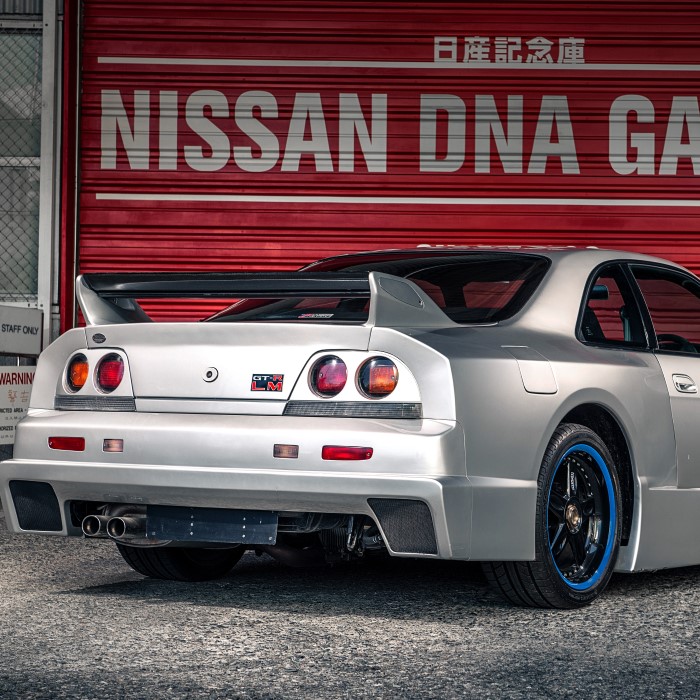
For the true purist, the V-Spec (Victory Specification) version of the GTR R33 is the ultimate prize. Nissan introduced this trim level to celebrate racing success. It offered a host of upgrades that took the car to the next level. First, the suspension was completely overhauled. It featured stiffer springs and thicker anti-roll bars. This lowered the car and improved cornering capabilities drastically. Second, the brakes were upgraded. The V-Spec came with larger Brembo calipers and rotors. This provided immense stopping power and better heat dissipation. Thus, the car was track-ready right off the showroom floor.
In addition, the V-Spec models received exclusive features. They were equipped with a carbon fiber rear diffuser. This part helped manage airflow under the car, increasing downforce. They also featured unique alloy wheels that were lighter than standard models. Weight reduction was a key goal for the V-Spec. Every kilogram saved improved the power-to-weight ratio. These changes might seem minor on paper. However, on the road, they transformed the driving experience. The car felt sharper, more responsive, and more connected. Enthusiasts seeking the best possible experience often hunt for these specific models. The GTR R33 V-Spec represents the pinnacle of the R33 lineup. It is a testament to Nissan’s commitment to continuous improvement. The V-Spec is not just a badge; it is a completely different animal. For collectors, the premium placed on these models is well justified by the engineering contained within.
Community and Culture: The JDM Boom
The rise of the GTR R33 in popularity is closely tied to the JDM (Japanese Domestic Market) boom. In the early 2000s, movies and video games introduced these cars to a global audience. Suddenly, everyone knew about the Skyline GT-R. The R33 was often featured prominently in media. Its sleek looks made it a natural fit for the silver screen. This exposure created a massive fanbase in markets where the car was never officially sold. As import laws relaxed in many countries, the R33 became more accessible. Consequently, a vibrant community of owners and fans emerged. This community shares knowledge, parts, and a passion for the platform.
Because the car is so tuner-friendly, the culture around it is incredibly diverse. Some owners build high-horsepower monsters for the drag strip. Others restore them to concours-quality condition. The aftermarket support for the GTR R33 is vast. Companies all over the world produce parts ranging from engine components to interior trim. This support ensures that owners can keep their cars running and improving for decades. It is not just a car; it is a hobby and a lifestyle. Car meets often feature rows of R33s, each one unique in its build. The camaraderie among Skyline owners is strong. They understand the nuances of owning a classic Japanese performance car. This sense of belonging adds to the car’s appeal. It is not merely about driving; it is about being part of a global family united by a love for engineering excellence.
Buying Guide: What to Look For
For those looking to purchase a GTR R33, the market can be tricky. As the cars age, finding a clean example becomes harder. Therefore, knowing what to look for is essential. First, check the chassis for rust. This is the enemy of any 90s Japanese car. Pay close attention to the wheel arches, floor pans, and under the rear spoiler. Rust repair can be incredibly expensive. Second, inspect the engine carefully. Listen for any unusual noises from the RB26DETT. Look for smoke on startup, which could indicate turbo seal issues. While the engine is robust, it requires proper maintenance. Check the service history for regular oil changes. Intercooler piping and the clutch are also common wear items.
Additionally, verify the authenticity of the VIN numbers. Because these cars are popular, some may have stolen parts or “cut-and-shut” repairs. A reputable importer or a knowledgeable mechanic should inspect the car before purchase. The interior is another area to check. The dashboards on R33s are prone to cracking. Finding a replacement dash can be difficult and costly. Ensure that the ATTESA system works correctly. Test the 4WD system by doing a tight turn in a parking lot. There should be no binding or strange noises. The GTR R33 is a fantastic investment, but only if you buy a good one. Doing your homework will save you headaches and money down the road. The market values for these cars have been steadily rising. A well-maintained example is a sound financial asset as well as a joy to own.
FAQ: Common Questions About the R33
How much does a R33 GT-R cost?
The price of an R33 GT-R varies significantly based on condition and mileage. Currently, prices generally range from . Low-mileage, stock examples and V-Spec models command the highest premiums. The market for JDM cars has seen a surge in value recently. Therefore, a pristine GTR R33 can be quite a significant investment.
Is the R36 GT-R confirmed?
As of now, Nissan has not officially confirmed the existence of an R36 GT-R. There have been many rumors and concept cars shown. However, the future of the GT-R lineage remains a topic of much speculation. Enthusiasts are eagerly awaiting news. For now, the R35 is the current model, and the R34 is the latest “Skyline” to be officially released in some markets.
Why is the R33 called Godzilla?
The nickname “Godzilla” originally applied to the R32 GT-R due to its dominance in Australian touring car racing. However, the name stuck to the entire GT-R lineage. The GTR R33 inherited this title because it continued the legacy of being a monster on the track. It was a destructive force that crushed European supercars in performance tests. Its advanced technology and sheer speed made it seem like a beast that could not be tamed.
Conclusion: A Timeless Icon
In conclusion, the GTR R33 has successfully shed its reputation as the “middle child” of the Skyline family. It has emerged as a sophisticated, capable, and highly desirable classic. It offers a unique blend of 90s turbo charm and advanced all-wheel-drive technology. The driving experience is visceral yet predictable. Its timeless design continues to turn heads on the street. Furthermore, its proven reliability on the track gives owners confidence. Whether you are a seasoned collector or a new enthusiast, the R33 offers something special.
It represents a golden era of Japanese automotive engineering. The appreciation for this model will only continue to grow. The GTR R33 is not just a car from the past; it is a legend that lives on. It stands tall among giants, holding its own against history. For anyone seeking a true driver’s car with a rich heritage, this is the one to watch. It remains a favorite for all the right reasons.
Leave a Reply