What Is an Automotive Relay and Why Does Your Car Need One?
An automotive relay is a small electrical switch. It uses a low‑current signal to control a high‑current circuit. This is essential because many car components draw heavy power. Headlights, fuel pumps, and cooling fans need large amounts of electricity. If the switch on your dashboard directly handled that current, it would overheat or fail. A relay solves this problem.
The relay contains an electromagnet. When a small current flows through the coil, it creates a magnetic field. This field pulls a contact closed. Then the high‑current circuit can operate. The result is safe, reliable control. You can find common automotive relay applications in cars everywhere. For example, the automotive relay for headlights activates the high‑beam circuit. It also protects the headlight switch from damage.
Another example is the starter relay. When you turn the key, a small signal goes to the relay. The relay then sends full battery power to the starter motor. Without it, the ignition switch would carry too much load. Similarly, fuel pump relays and horn relays work the same way. These are all common automotive relay applications in cars.
Moreover, relays allow multiple circuits to be controlled by one switch. This simplifies wiring. It also improves safety. Because the high‑current side is isolated, there is less risk of short circuits. So, understanding the automotive relay is key to maintaining your vehicle. It is a simple but vital component.
Inside the Device
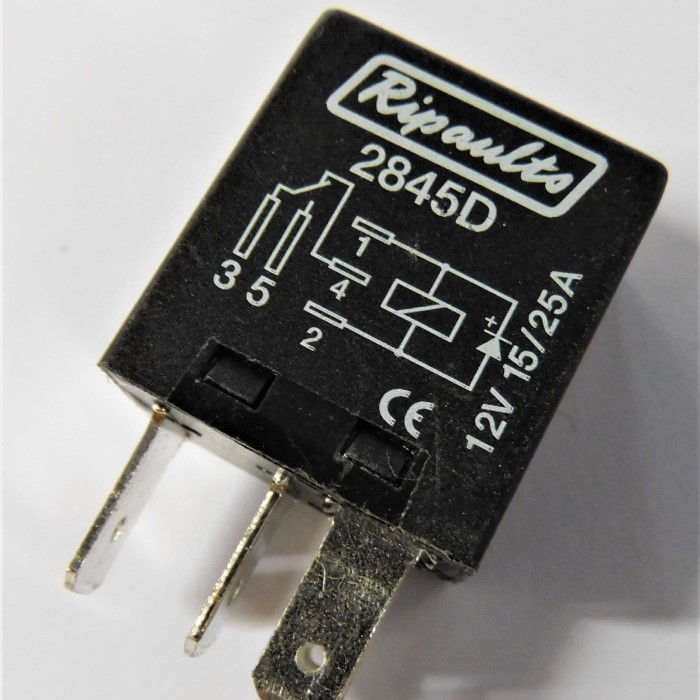
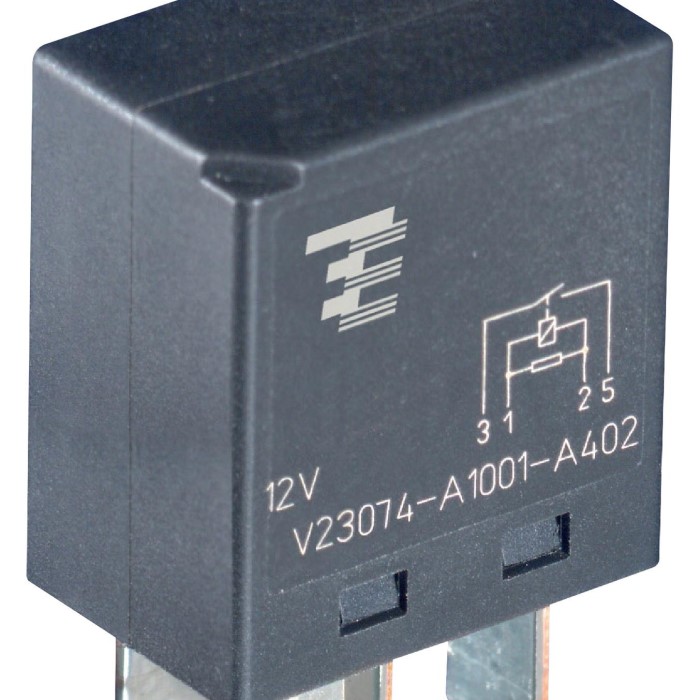
Let us look inside a typical relay. It has four or five pins. The two small pins connect to the coil. The other pins connect to the high‑current circuit. When you apply power to the coil, the electromagnet activates. A metal armature moves. This armature either opens or closes the contacts.
Most relays are normally open. This means the circuit stays off until the coil receives power. Some are normally closed. They stay on until the coil energizes. For car applications, normally open is typical. For instance, the automotive relay for headlights is normally open. You press the switch, the coil gets power, and the lights turn on.
The coil usually requires 12V DC in cars. However, some relays work with 5V or 24V. The current needed to energize the coil is very small, often less than 200 milliamps. This is why a thin wire can control it. The main circuit can handle 30 or 40 amps. That is enough for headlights or a fan.
A diode often sits across the coil. This diode protects the circuit from voltage spikes when the coil de‑energizes. Such spikes can damage electronic modules. So, many relays include a built‑in suppression diode. You can see it marked on the relay case.
Finally, the contacts are made of silver alloy. This resists arcing. Arcing occurs when the contacts open under load. Over time, arcing can wear them out. But a quality relay lasts for thousands of cycles. So, the design is robust. That is why it is used in nearly every modern car.
Common Automotive Relay Applications in Cars You Should Know
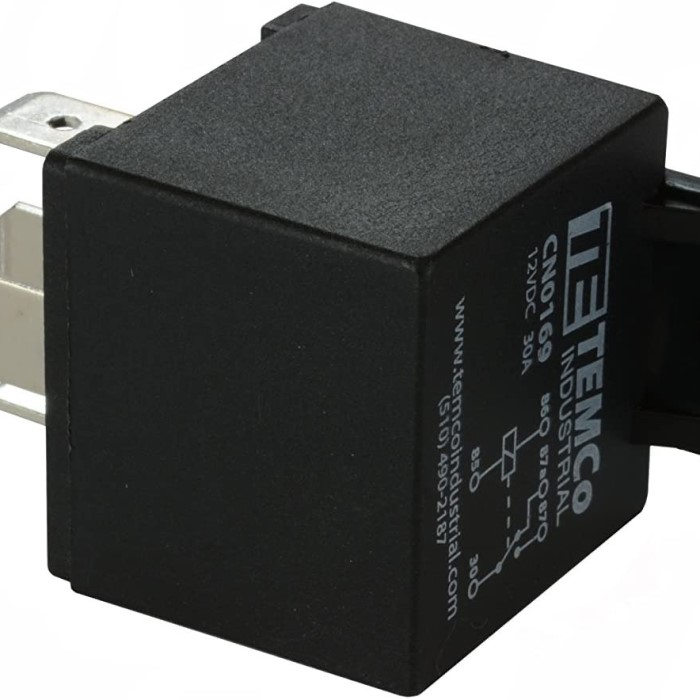
Common automotive relay applications in cars are numerous. Let us list the most important ones.
Headlights: The automotive relay for headlights is very common. It allows the headlight switch to handle only a small current. The relay does the heavy lifting. This prevents switch burnout. It also lets you use higher‑wattage bulbs safely.
Fuel pump: The fuel pump relay supplies power to the pump. It is often controlled by the engine control unit (ECU). This means the pump runs only when the engine starts or the ignition is on. It improves safety.
Cooling fan: The engine cooling fan uses a relay. The fan draws high current, often over 20 amps. The relay turns it on when the coolant temperature rises. Some cars have a fan relay that works with the air conditioning.
Starter motor: The starter relay is sometimes called a starter solenoid. It connects the battery to the starter motor. The ignition switch only sends a small signal. This relay handles the huge current needed to crank the engine.
Horn: The horn relay prevents the horn button from overheating. It also allows the horn to sound at full power. Many cars use a dual tone horn, and the relay drives both.
Turn signals and hazard lights: Some vehicles use a relay for the flasher. This relay opens and closes rapidly. It causes the lights to blink. Although modern flashers are electronic, older systems use a thermal relay.
Fog lights and auxiliary lights: Additional lights often have their own relay. This keeps the wiring neat. It also avoids overloading the factory switch.
Automotive Relay vs Contactor Differences: Which One Does Your Car Use?
You may hear the terms relay and contactor used interchangeably. But there are automotive relay vs contactor differences that matter. In simple terms, a contactor is a heavy‑duty relay. It handles much higher currents. Industrial contactors can switch hundreds of amps. A typical automotive relay handles 30 to 40 amps. That is enough for most car accessories.
Contactors also have different construction. They are larger and often have arc chutes. These chutes extinguish the electric arc when the contacts open. Relays are smaller and rely on silver contacts. Contactors are designed for frequent switching under full load. Relays are used for medium loads.
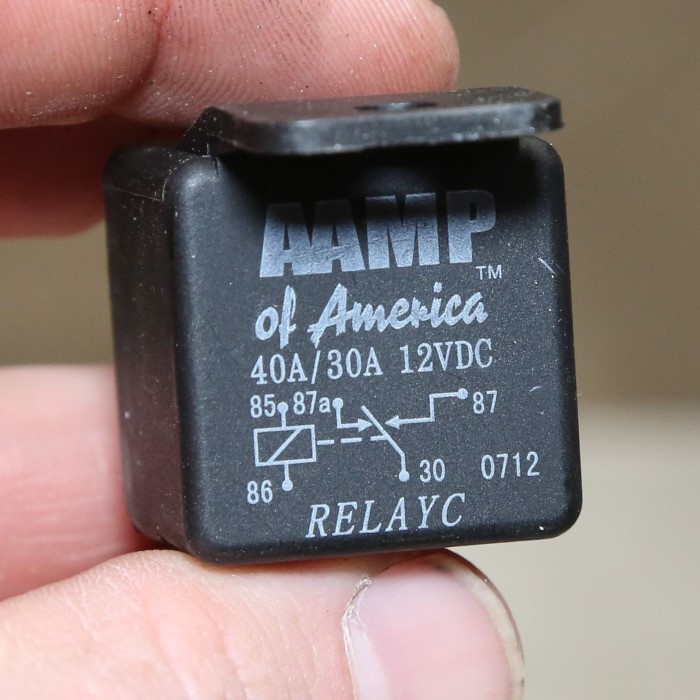
In a car, you find contactors in electric vehicle (EV) battery packs. They connect the high‑voltage battery to the motor. These contactors can handle 300 amps or more. They also have safety features. For example, they can disconnect the battery in a crash. Standard automotive relay for headlights or a fuel pump does not need that rating.
Another difference is the coil voltage. Contactors often use 24V or 48V coils in industrial settings. Car relays use 12V. However, some EVs use contactors with 12V coils. The size and cost are also different. Contactors are bulkier and more expensive.
So, when should you use a relay vs a contactor? For most car repairs, a standard relay works. If you add a high‑powered winch or an air compressor, you might need a contactor. But for lights and pumps, stick with a relay. Understanding these automotive relay vs contactor differences helps you choose the right part.
Signs and Symptoms
Troubleshooting automotive relay issues begins with recognizing symptoms. Here are common signs.
Component not working: If your headlights do not turn on, suspect the relay. The same applies to the horn, fan, or fuel pump. The component itself might be fine, but the relay fails to send power.
Clicking noise without result: You may hear a click when you activate the switch. That click is the relay engaging. But if the component still does not work, the relay contacts may be burned. Or the relay coil is okay, but the contacts are open.
Intermittent operation: Sometimes the headlights work, sometimes they do not. This indicates a failing relay. The contacts may be worn. They sometimes make connection, sometimes not.
Relay stays energized: A stuck relay can cause a component to run constantly. For example, a fan that never turns off. This drains the battery. It also can overheat the device.
Burned smell or melted plastic: A severe relay failure can produce heat. The plastic case may melt. This is dangerous. You must replace it immediately.
To confirm, you can test the relay with a multimeter. Check the coil resistance. It should be around 50 to 200 ohms for a 12V relay. Then apply power to the coil. Listen for the click. Measure continuity across the high‑current terminals. When the coil is energized, they should show low resistance. If not, replace it.
Another method: swap the suspected relay with an identical one from another circuit. If the problem moves, the relay is bad. This is a quick way to troubleshoot automotive relay issues.
Step‑by‑Step Guide
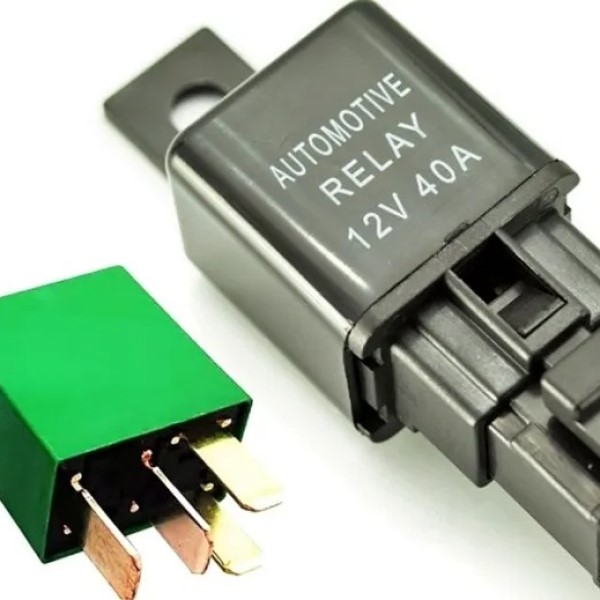
Installing a new automotive relay is straightforward. Follow these steps.
1. Gather tools and parts. You need a new relay that matches the original. Check the pin configuration. Also have a socket wrench, screwdriver, and wire strippers. Some installations require a relay socket or connector.
2. Disconnect the battery. Always remove the negative cable first. This prevents accidental shorts. It also protects the electronics.
3. Locate the relay. It is usually in the fuse box under the hood or inside the cabin. Refer to your owner’s manual for the diagram.
4. Remove the old relay. Pull it straight out. Some are held by a clip. Use gentle force. Do not break the socket.
5. Inspect the socket. Look for corrosion or melted plastic. Clean if needed. A dirty socket can cause poor contact.
6. Insert the new relay. Push it firmly until it clicks. Make sure the orientation matches. Most relays have a notch that aligns with the socket.
7. Reconnect the battery. Start the car and test the component. For example, turn on the headlights. Check that they work.
8. Secure any loose wires. If you are adding a new relay for an aftermarket accessory, mount it with a bracket. Use a fuse in the power wire. Label the relay for future reference.
That is it. Installing a new automotive relay can be done in minutes. It saves you a trip to the mechanic. Just remember to use the correct relay rating. If the load is high, choose a 40‑amp relay with proper terminals.
When to Replace an Automotive Relay vs Repairing It
You might wonder whether to replace or repair a relay. In most cases, replacement is best. Relays are cheap. A standard 4‑pin relay costs a few dollars. They are not designed to be opened and fixed. The contacts wear down. The coil can break. It is not practical to repair.
However, sometimes the issue is the socket, not the relay. Corroded terminals or a loose wire can cause a similar problem. If the relay tests fine but the socket looks bad, replace the socket or clean the contacts. You can use contact cleaner and a small brush. Then reinsert the relay.
Another scenario: if you are adding a new circuit, you may need to install a relay. This involves wiring from scratch. In that case, you are not replacing an old one. You are installing a new automotive relay. This is a common upgrade for auxiliary lights or a winch.
For the automotive relay for headlights, replacing the relay is easy. Just buy the same type. For example, a standard SPST (single pole single throw) relay works. Some headlights use a different pinout. Check the diagram. If you install the wrong one, it may not work or cause a short. So always match the part number.
In summary, repair the socket, replace the relay. This rule applies to most troubleshooting automotive relay issues. It saves time and ensures reliability.
Understanding Relays in Advanced Systems: Canbus and Smart Relays
Modern cars use more than simple relays. Some systems integrate a smart relay. This is a relay with built‑in electronics. It can communicate with the vehicle’s computer. For example, a smart relay for the cooling fan can vary its speed. It uses pulse‑width modulation (PWM) to control a fan motor.
Another advanced type is the CANbus relay. It receives commands over the controller area network (CAN). This reduces wiring. Instead of a wire from the switch to the relay, a digital message travels through the CAN bus. The relay then activates. This is common in luxury cars.
You may encounter these when troubleshooting automotive relay issues. A standard relay test may not work. You need a scan tool to send commands. Also, these relays are more expensive. If they fail, you must get a direct replacement from the dealer.
However, for most DIY repairs, you deal with simple relays. The automotive relay for headlights in a typical car is a standard unit. The common automotive relay applications in cars like fuel pump, horn, and starter all use generic ones. So, learning the basics covers 90% of cases.
Final Thoughts
An automotive relay is a small hero in your car. It handles high currents safely. From the automotive relay for headlights to the fuel pump relay, these parts are essential. Knowing the common automotive relay applications in cars helps you understand your vehicle. Being able to perform troubleshooting automotive relay issues saves money. Installing a new automotive relay is a skill any driver can learn.
Furthermore, understanding automotive relay vs contactor differences helps when you add heavy accessories. You will choose the correct component. By taking time to learn these basics, you become a more confident car owner.
Remember, relays are easy to test and replace. Keep a few spares in your glove box. They are cheap and can get you out of a jam. If your headlights fail on a dark road, a new relay can fix it. So, master the automotive relay. Your vehicle will thank you.
Leave a Reply